
C. Nyal de Kaye
New member
AUSTRALIAN GOLD RUSH: SOFALA - AN OLD GOLD TOWN
(The pics that follow lose quite a bit of detail because they are reduced in size. They are best seen by enlarging them.)
This is about the gold rush area in my home state of New South Wales. Gold was found along the Turon River area in 1851 and caused the genesis of a town named Sofala.
Sofala is about a 3 1/2 hours drive from central Sydney and is an hour or so from Bathurst which is an internationally known Australian country city. Hill End is probably a better known Australian gold town and it is less than an hours drive from Sofala.
Sofala remains almost the same as it was 150 years ago. Very narrow streets, small buildings and the inevitable pub. It is still functioning as a town, albeit a very sleepy one with a modest population. It is a probably fairly described as a living cemetery.
We went there recently looking for a place to camp with the aim of prospecting there sometime soon. I feel very confident that anyone interested in prospecting, and it's colourful history, will thoroughly enjoy Sofala and the surrounding district.
This was a great and very rich gold area. In 1851 alone it was estimated that 152,000 ounces (4310kg) of gold was found in the area. If we base our calculations on a modest gold price of $1400 US per ounce today then that gold was worth $212, 800,000 US that is $212 millions dollars plus.
I hope that the many who will not get the chance to see Sofala personally will get a bit of an idea of the area from a few pics, and a bit of info and blarney as well.
______________
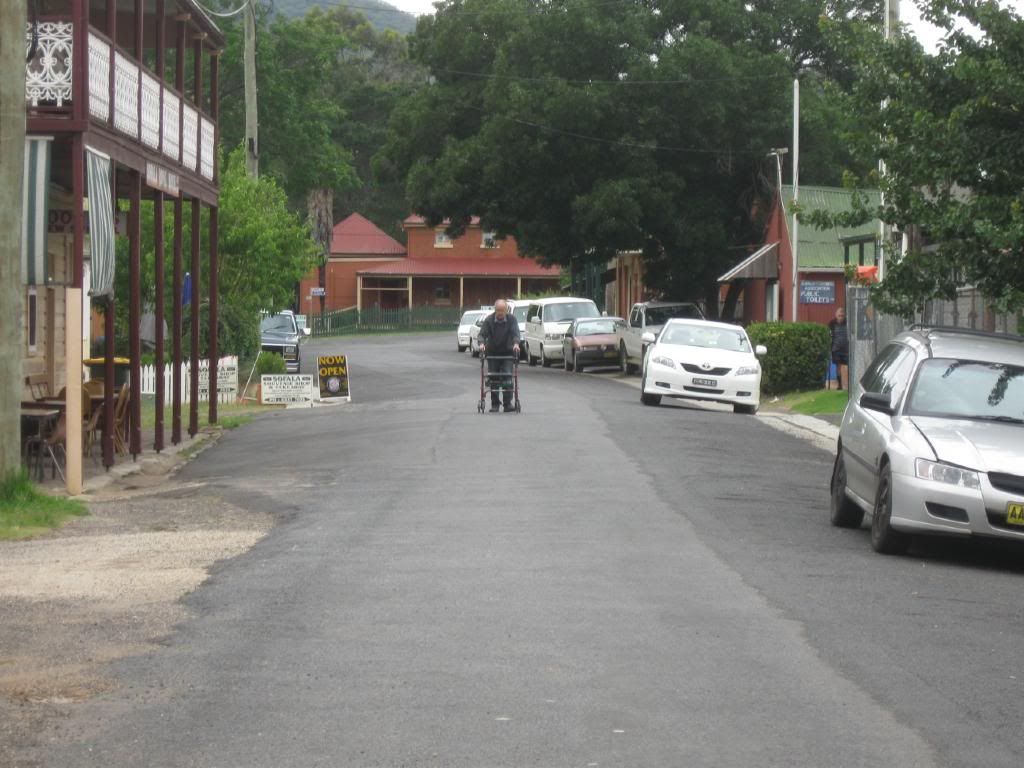
Our first pic clearly illustrates the morning rush-hour with local resident and junior member of the Sofala Youth Group, Jerry Atric, making his way down the high street (the Broadway) to buy his morning paper. It is over 100 yards from his home to the general store, but his morning ritual is getting more difficult each day with the rapidly increasing traffic congestion.
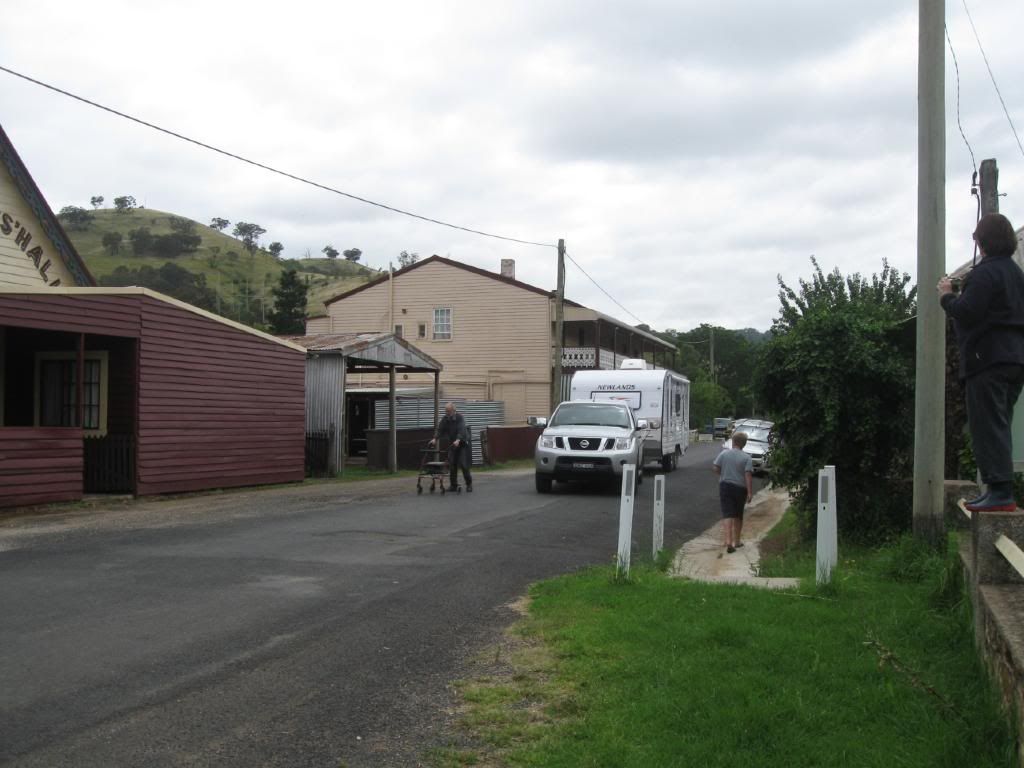
On his way home poor old Jerry was closely followed all the way by this "outsider." Never-the-less Jerry held his ground and walked the entire 100 yards right in the middle of the road. The pic shows him just turning off into the Oddfellows' Hall, where he lives. The rather anxious caravaner is about to rush pass him. The impatient driver is getting ulcers, but Jerry isn't.
It is rumoured that Jerry died last October, but when this pic was taken the news hadn't yet reached the sleepy town, so maybe Jerry's in for a shock.
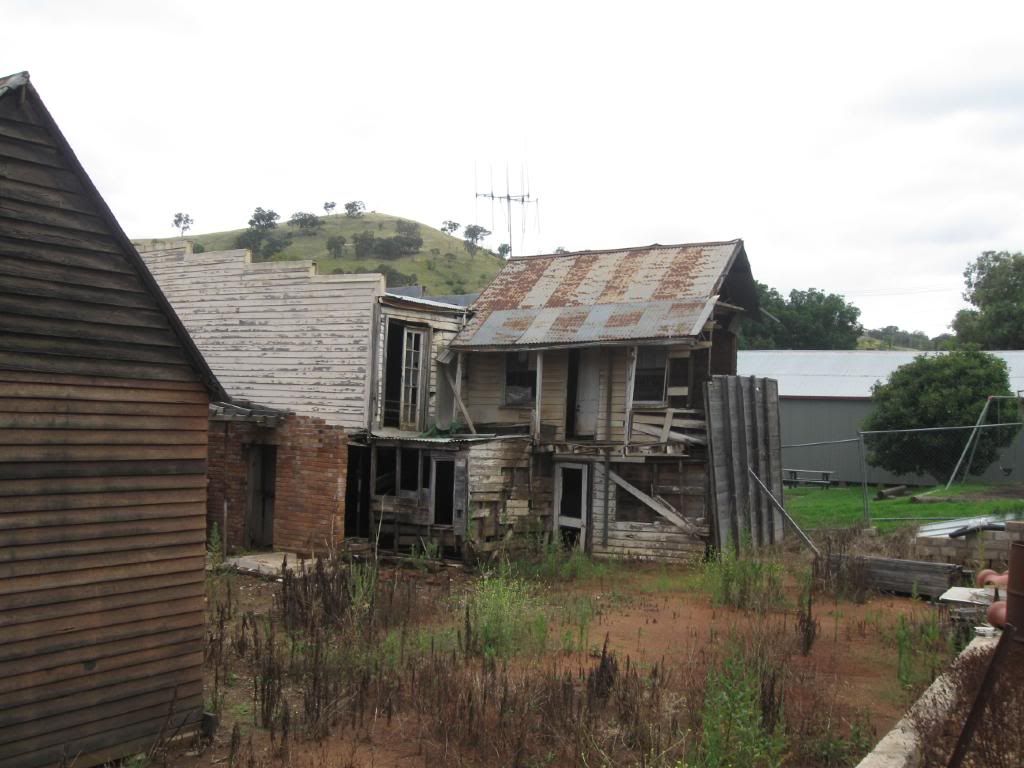
Sofala remains as it was about 150 years ago. This is one of the many miner's houses.

Some buildings are in a state of decay, but Sofala remains one of Australia's best above ground cemeteries.
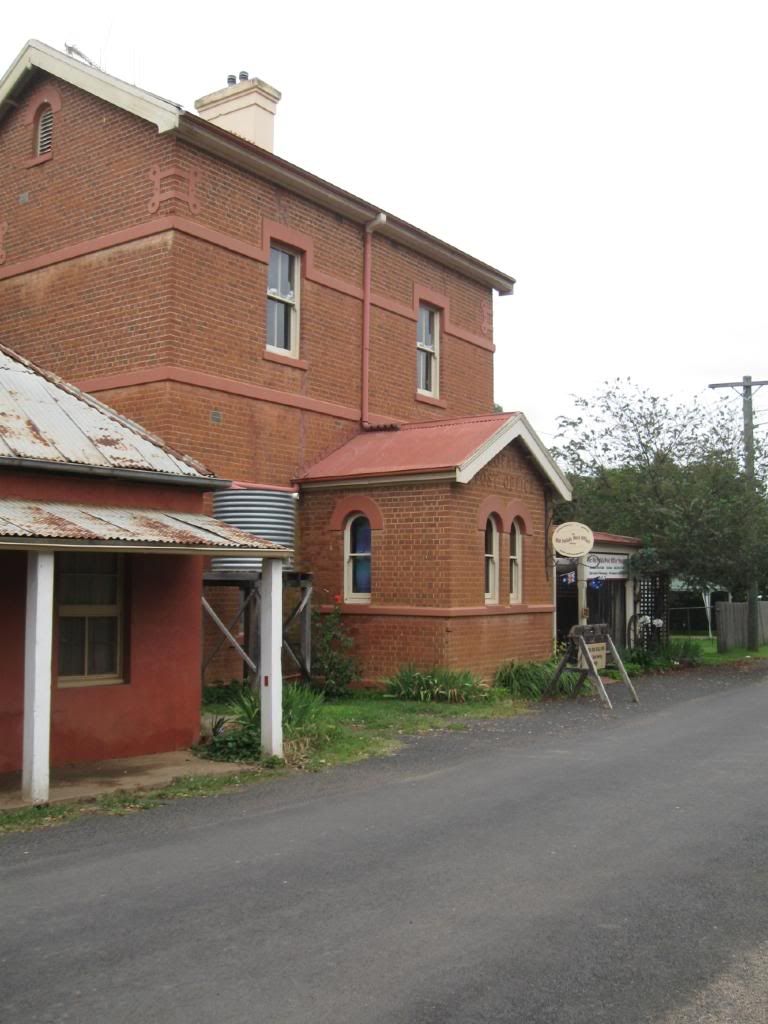
The rather pretentious Post Office.
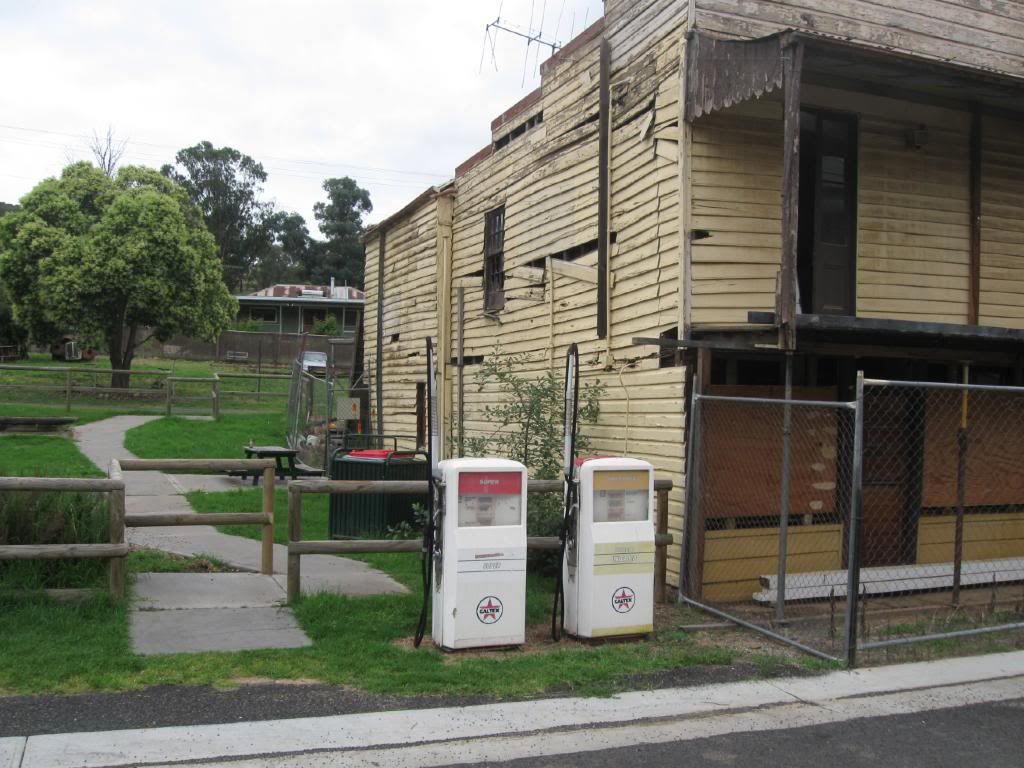
The remains of the Petrol Station.
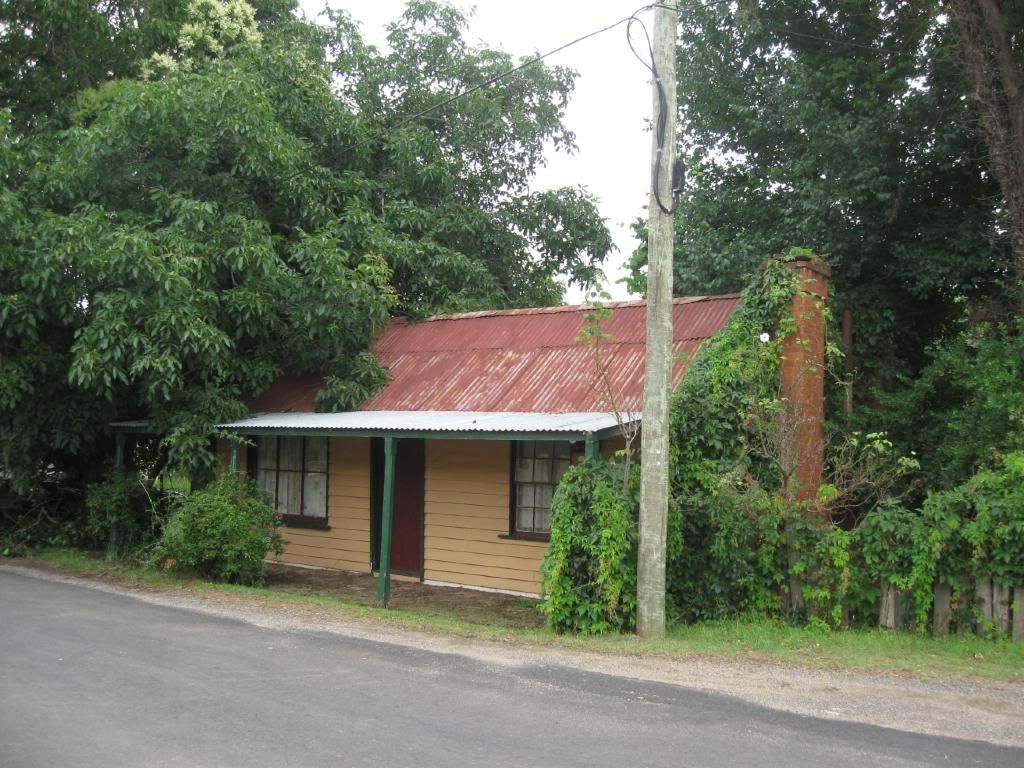
This miners house is in a side street. Sofala has at least three streets, so it is no mean town.
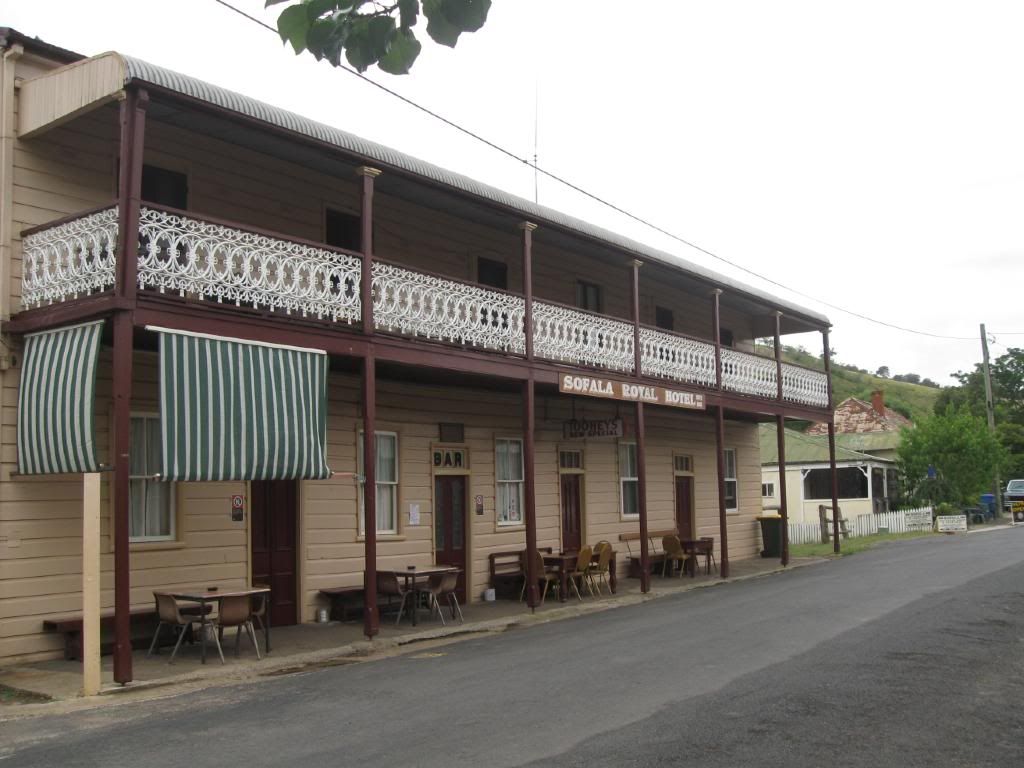
The inevitable pub.
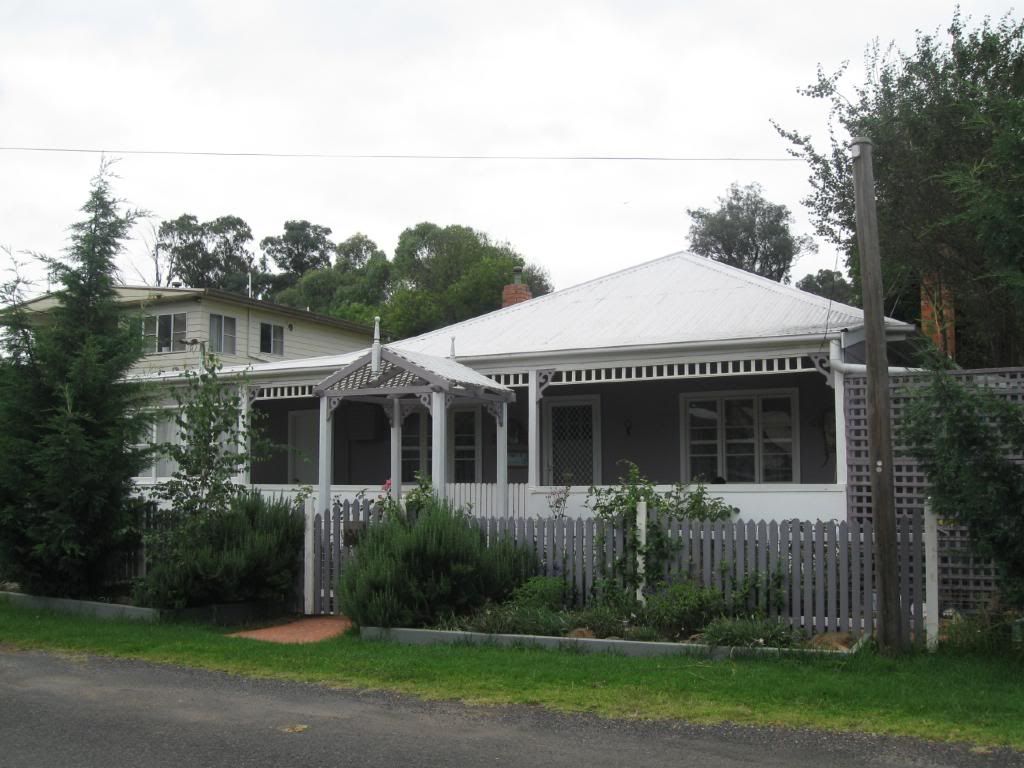
There are a few well-restored homes here but most could do with a bit of care. We saw two with "For Sale" signs displayed. If you want one, and don't get here within the next ten years, you may well miss out; so get your skates on.
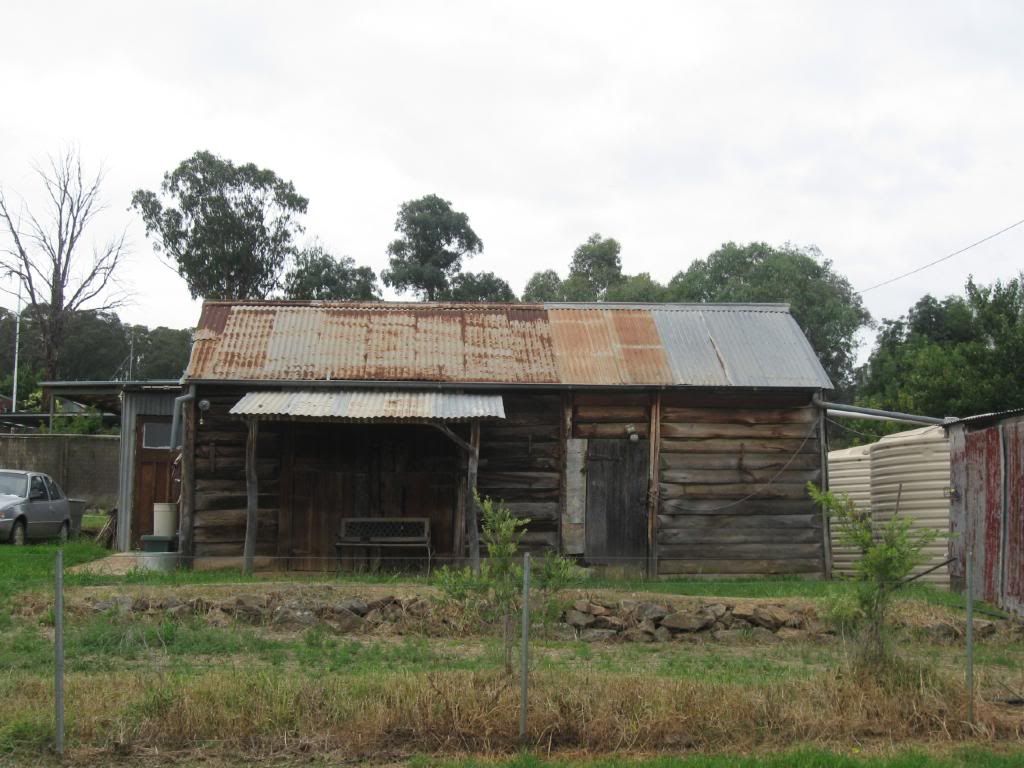
Here is an example of a slab hut and it's still occupied today.
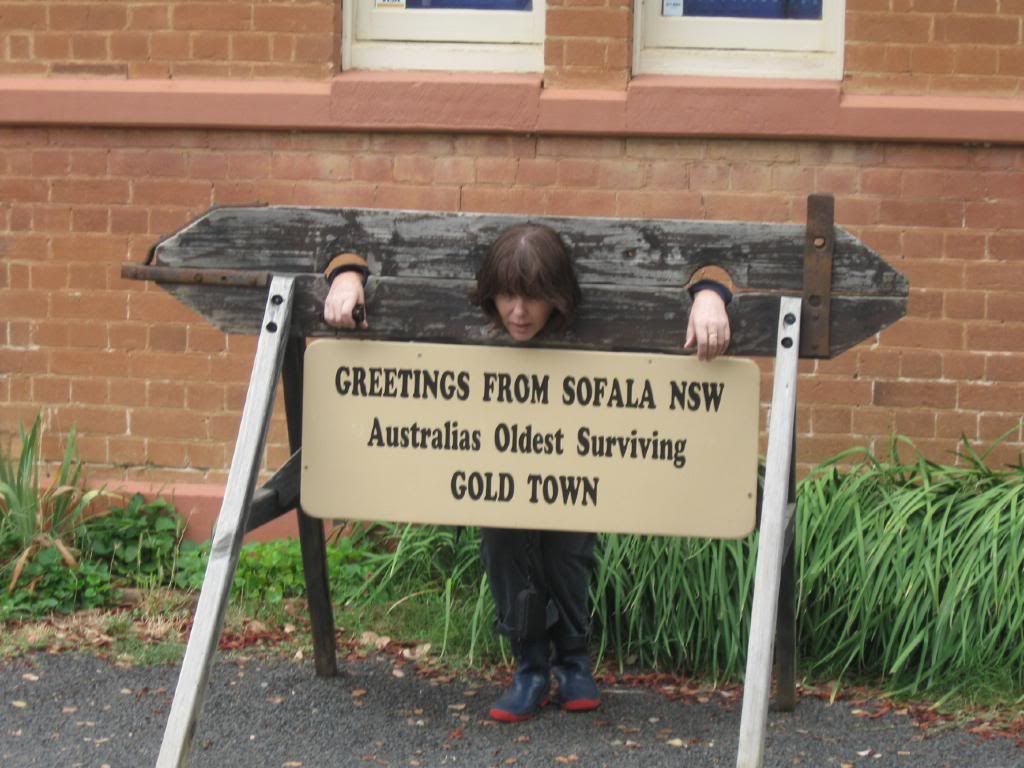
This is how they dealt with the wayward, suitable demonstrated by my wife's sister Lyn. It seems quite appropriate for my darling sister-in-law, and I should know as I've known her for over 60 years.
WATTLE FLAT
There are a number of gold fields in the area. One is Wattle Flat, a misnomer as it is anything but flat. The diggings there are very hard to find and without some local help, or information from someone in the know, you will never find them.
A small track leads to them, but it appears to be a private road and some locals will con you into believing that it's private in order to keep you out. It is public land however and easily accessible once you find the track.
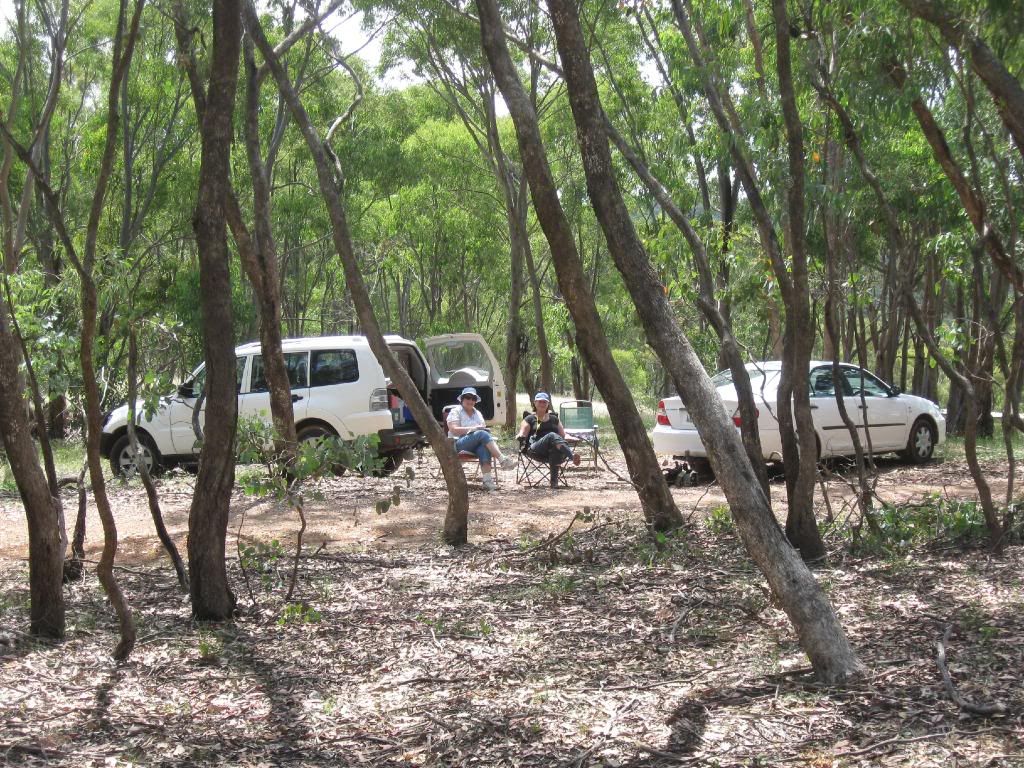
This is where we set up our Day Camp, Robyn on the left and her sister Lyn.
The diggings are a bit overgrown and, unusually for Australia, are rather green due to the enormous rains we've had in recent months.
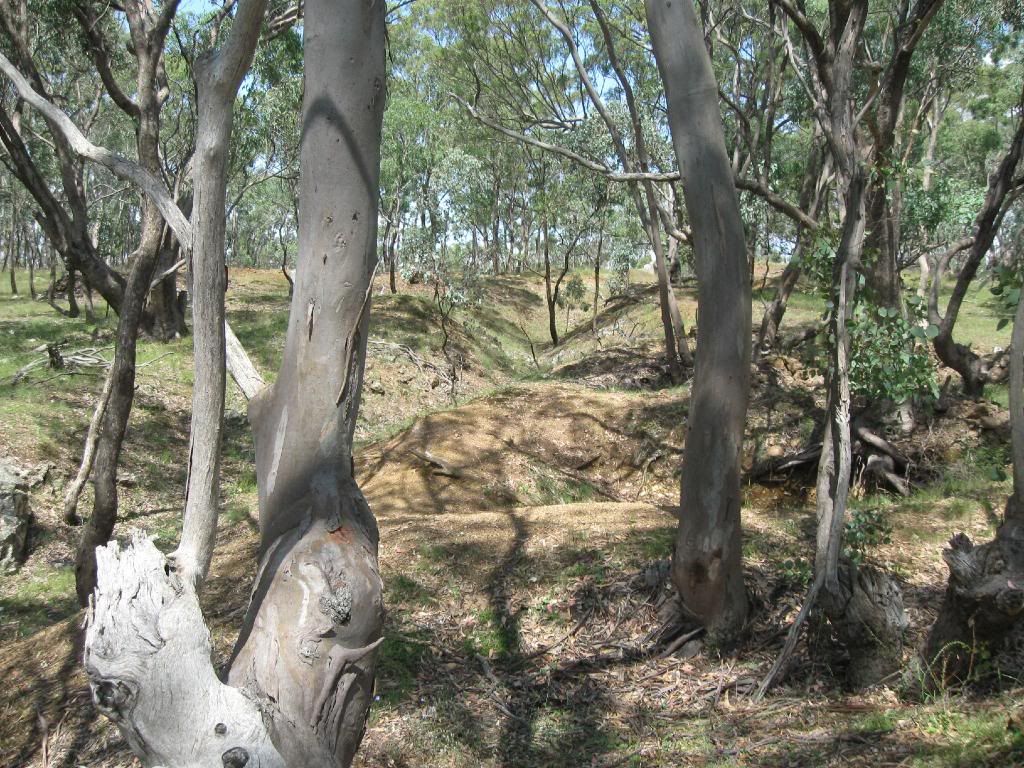
One of the shafts. There are many here, all uncovered and deep enough to cause serious problems should you wander into one.
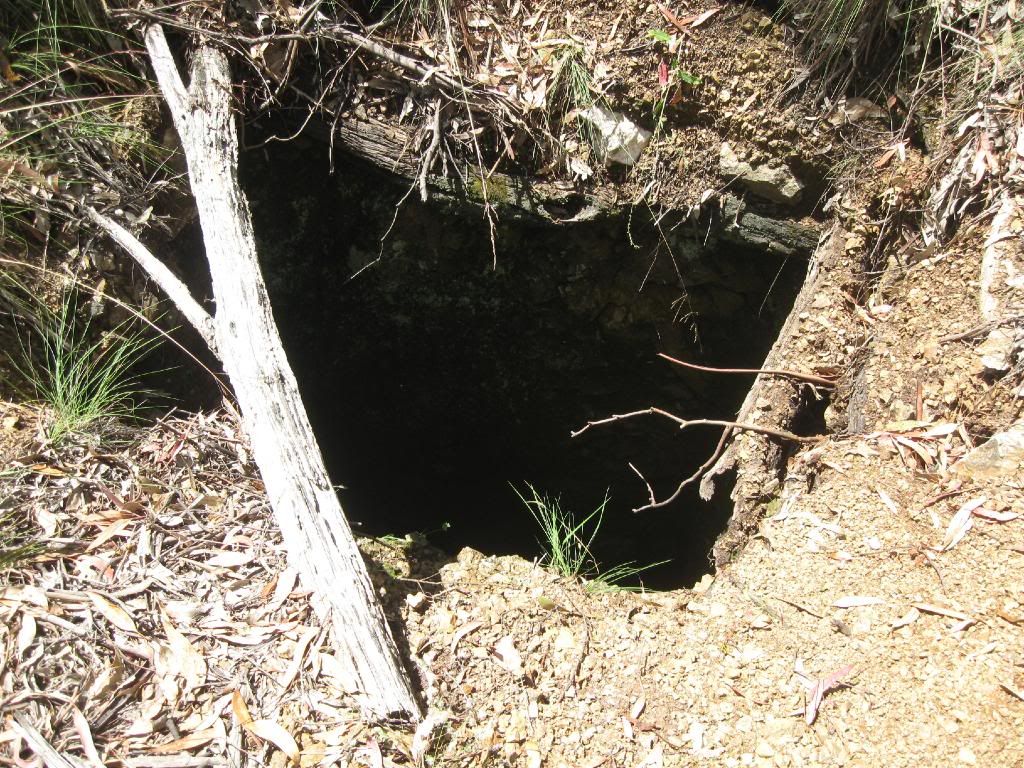
The diggings are quite extensive and extend a long way down the slope in a curved line. By my GPS it was 298 metres (about 1000 feet) from the top shaft to the lower one. There are a great many shafts along that line.
The ground was very rich here and the enterprising miners made a dam up the top of the hill, filled it by rainfall as far as I know, and then sluiced out the diggings to extract every scrap of gold.
This is how it now looks. Immediately in front of the lens is a shaft, then the eroded area caused by sluicing, and further across you can see another shaft.
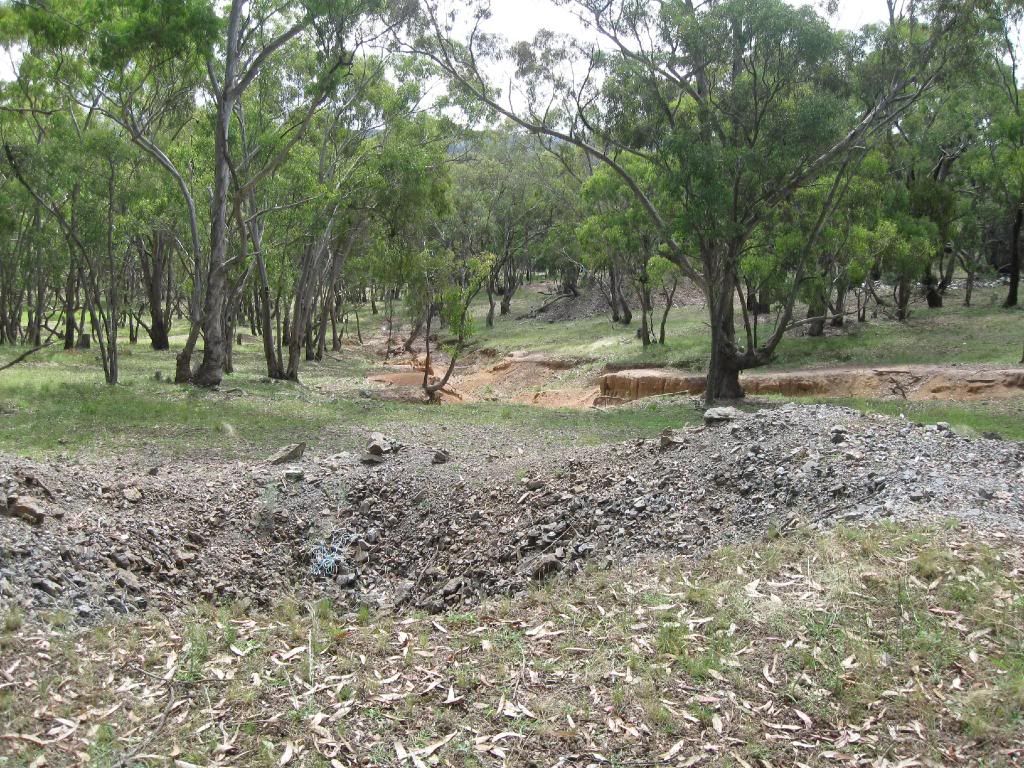
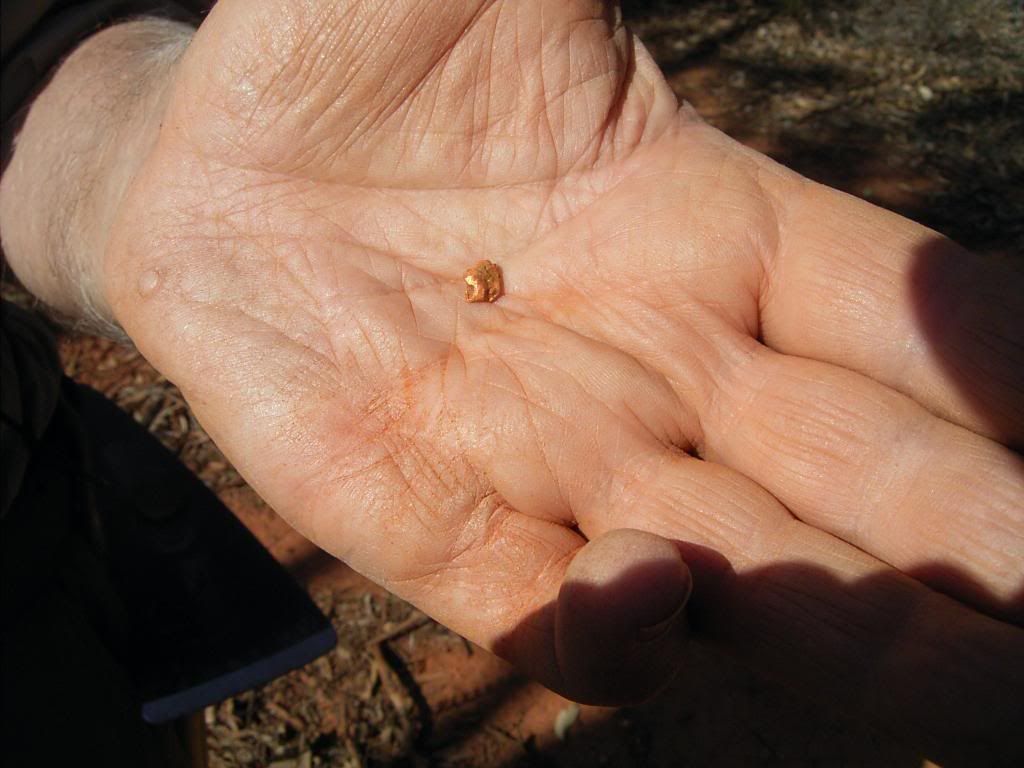
We were there looking for future sites for our later trip, not to detect this time. However I could not resist running the detector over a bit of ground on the left of this hill. I found some colour, just a half grammer, but all gold is good gold. There was so much metallic rubbish that I changed to a DD coil and put the Iron Reject up to 8 on my Minelab GPX4500. It stopped a lot of digging but there was still a myriad of bullets, shotgun shells and the like. It's going to be hard work on that hill.
OAKEY CREEK
This was another rich very area and only a few miles from Wattle Flat.
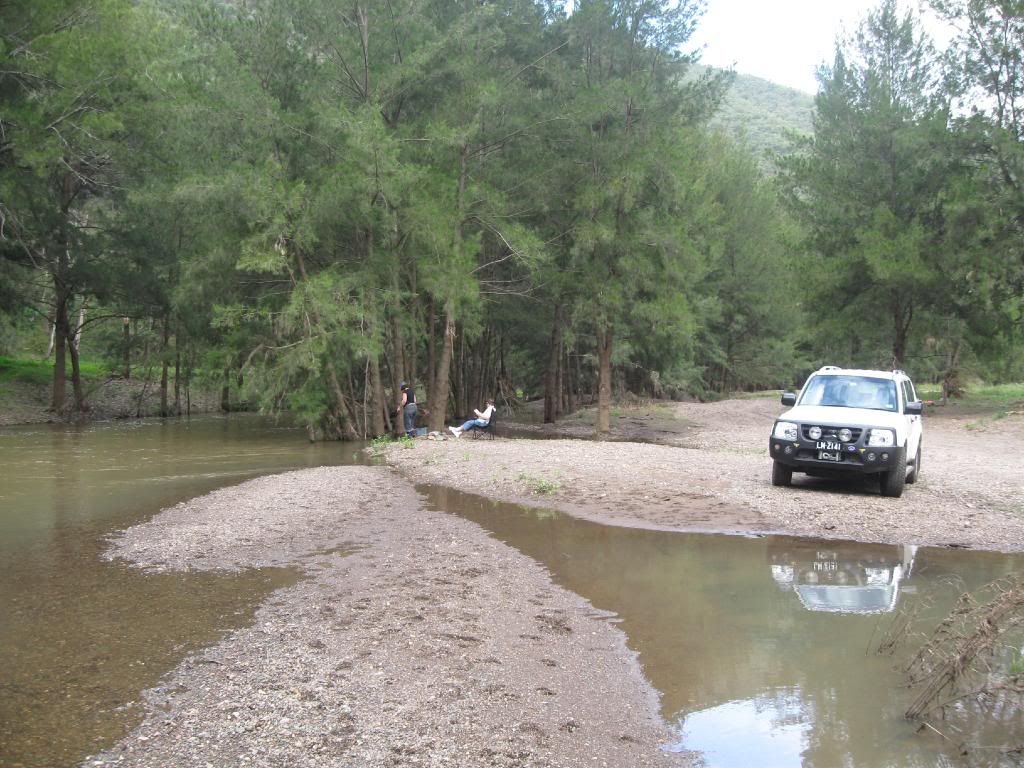
Lynie loaded a few shovels full into her dish and panned up some colour in her very first pan. It was then she discovered that she had left her Lesche digger back at Wattle Flat so we had to pack up and go get it. That put an end to Oakey Creek for that day, but it looks promising.
RATION HILL
On the way back we stopped off at Ration Hill for a bit of a recce. It too was a very rich area and was well worked over by Chinese diggers. The Chinese never reported their finds and so any of the recorded gold finds in this district EXCLUDE that found by the very enterprising and hard working Chinese. Officially they found, more or less, no gold at all. The pic shows the remains of some diggings.
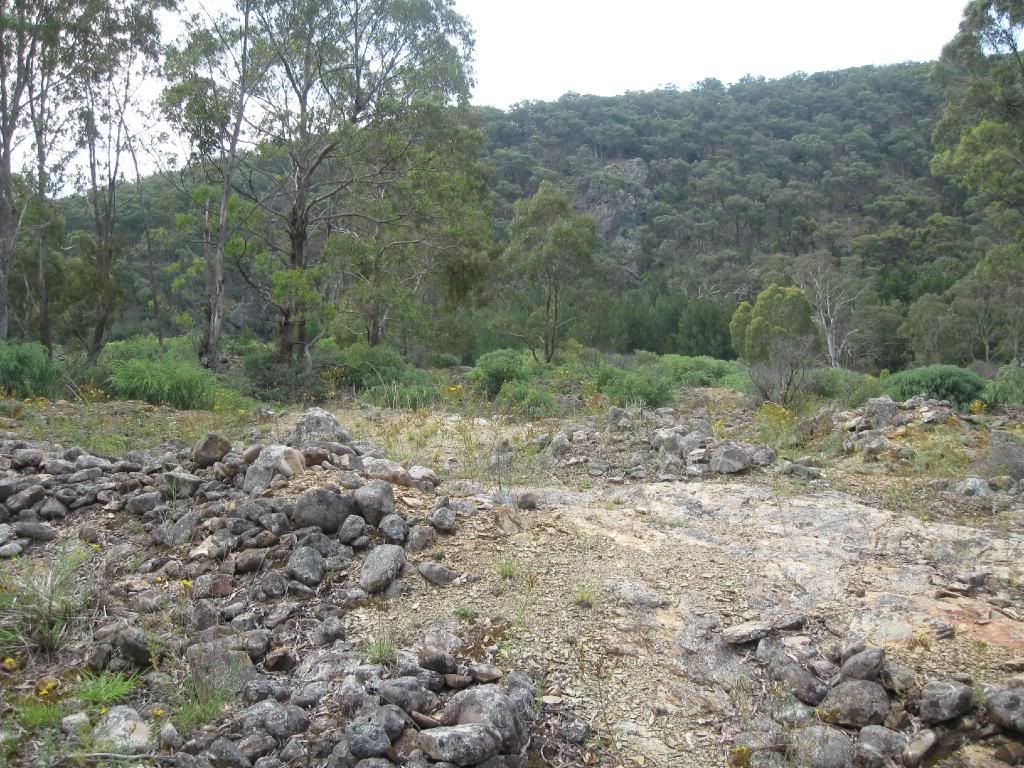
Here you can see the river rocks brought up from the shafts that bottomed out on the old riverbed. There are no deep shafts to be seen here as the weather over the years has filled them in.
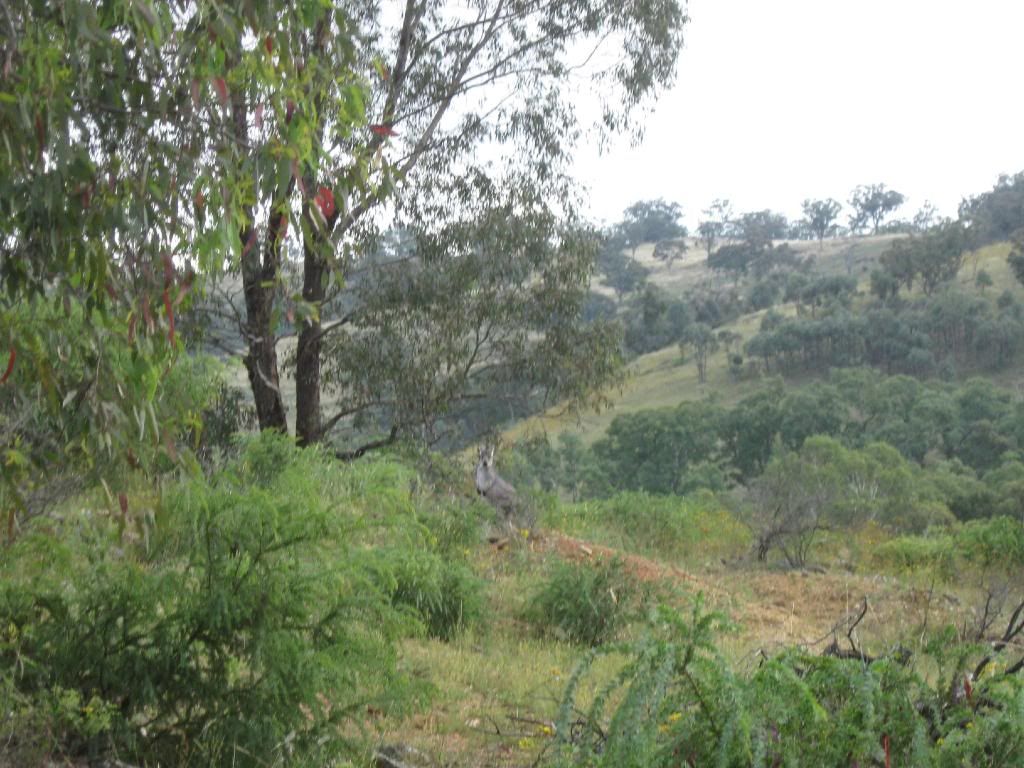
Wandering about on Ration Hill I was carefully watched by this little stickybeak who seemed quite fascinated by my presence.
This next pic shows the area after sluicing.
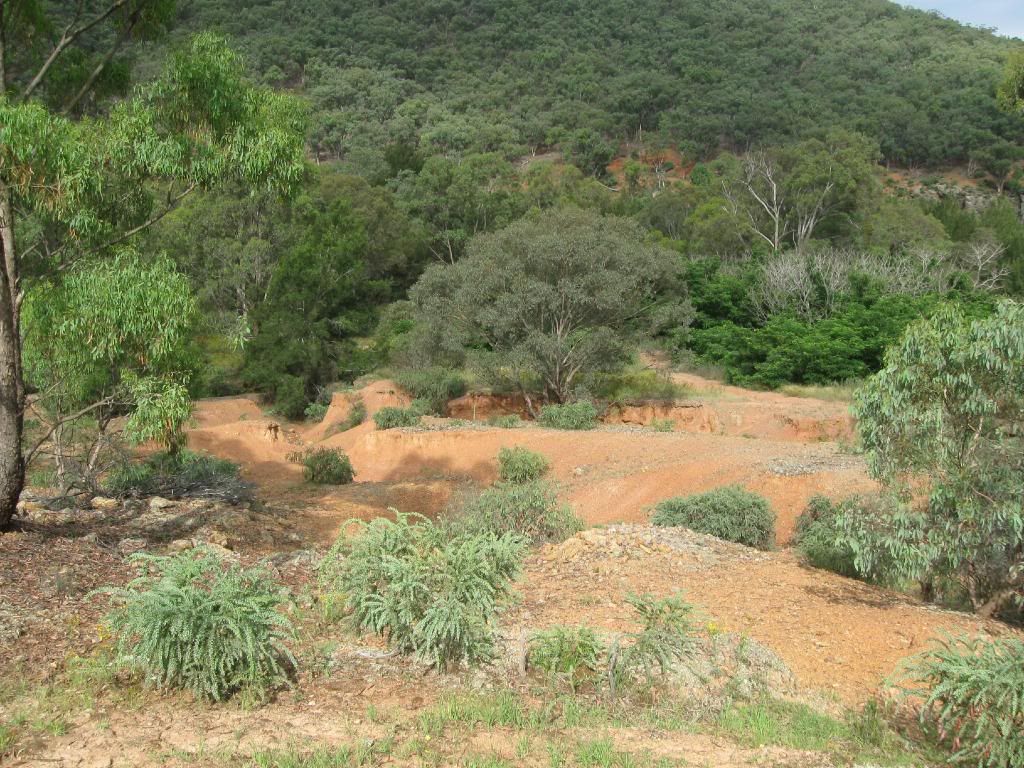
Sluicing this hill was done by a steam generated pump taken there in 1853. Then they washed out the dirt to get to the gold on the bottom. What a project it was.
The Chinese were very active in this region from 1857 onwards. They did a lot of sluicing too but by means of clever engineering, not steam driven pumps. They had extensive vegetable gardens but never ever grew flowers. They were remarkable people but officially recovered no gold at all.
However it is known that they found a nugget so large that it took two men to carry it, but what happened to it is quite a mystery. What we do know is that they shipped their dead mates back home. If we argue that the average Chinese miner was, let's say, about 5 feet 4 inches tall and of slight but athletic build, then he should have weighed no more that 80 kgs (175lbs). Remarkably they apparently weighed something like an amazing 300 kilograms (660lbs) each. This conclusion is based on the fact that their coffins were very heavy indeed. I wonder how we can account for that? Maybe they were just heavily boned.
Not only that, but when the wharf labourers were loading the coffins onto the ship they heard a distinct rattling from within some coffins. Could this be the origin of the term "death rattles"? Who knows? All we do know is that a lot of gold disappeared and no one has a clue just how much it was, or where it went.
A lot also ended up in the UK, in fact they got much more out of Australian gold than Australia ever did.
This was a very rich area and mining was active here until 1914. It those later years dredges operated in the Turon River taking an additional 29,793 ounces of gold. Intermittent mining took place as late as 1943. And I was there just recently, so it's all still happening.
Anyway, if you are even down our way then a trip to Sofala, and the surrounding area, will be quite rewarding. Please kindly leave your detector at home as there is not enough for us.
(The pics that follow lose quite a bit of detail because they are reduced in size. They are best seen by enlarging them.)
This is about the gold rush area in my home state of New South Wales. Gold was found along the Turon River area in 1851 and caused the genesis of a town named Sofala.
Sofala is about a 3 1/2 hours drive from central Sydney and is an hour or so from Bathurst which is an internationally known Australian country city. Hill End is probably a better known Australian gold town and it is less than an hours drive from Sofala.
Sofala remains almost the same as it was 150 years ago. Very narrow streets, small buildings and the inevitable pub. It is still functioning as a town, albeit a very sleepy one with a modest population. It is a probably fairly described as a living cemetery.
We went there recently looking for a place to camp with the aim of prospecting there sometime soon. I feel very confident that anyone interested in prospecting, and it's colourful history, will thoroughly enjoy Sofala and the surrounding district.
This was a great and very rich gold area. In 1851 alone it was estimated that 152,000 ounces (4310kg) of gold was found in the area. If we base our calculations on a modest gold price of $1400 US per ounce today then that gold was worth $212, 800,000 US that is $212 millions dollars plus.
I hope that the many who will not get the chance to see Sofala personally will get a bit of an idea of the area from a few pics, and a bit of info and blarney as well.
______________
Our first pic clearly illustrates the morning rush-hour with local resident and junior member of the Sofala Youth Group, Jerry Atric, making his way down the high street (the Broadway) to buy his morning paper. It is over 100 yards from his home to the general store, but his morning ritual is getting more difficult each day with the rapidly increasing traffic congestion.
On his way home poor old Jerry was closely followed all the way by this "outsider." Never-the-less Jerry held his ground and walked the entire 100 yards right in the middle of the road. The pic shows him just turning off into the Oddfellows' Hall, where he lives. The rather anxious caravaner is about to rush pass him. The impatient driver is getting ulcers, but Jerry isn't.
It is rumoured that Jerry died last October, but when this pic was taken the news hadn't yet reached the sleepy town, so maybe Jerry's in for a shock.
Sofala remains as it was about 150 years ago. This is one of the many miner's houses.
Some buildings are in a state of decay, but Sofala remains one of Australia's best above ground cemeteries.
The rather pretentious Post Office.
The remains of the Petrol Station.
This miners house is in a side street. Sofala has at least three streets, so it is no mean town.
The inevitable pub.
There are a few well-restored homes here but most could do with a bit of care. We saw two with "For Sale" signs displayed. If you want one, and don't get here within the next ten years, you may well miss out; so get your skates on.
Here is an example of a slab hut and it's still occupied today.
This is how they dealt with the wayward, suitable demonstrated by my wife's sister Lyn. It seems quite appropriate for my darling sister-in-law, and I should know as I've known her for over 60 years.
WATTLE FLAT
There are a number of gold fields in the area. One is Wattle Flat, a misnomer as it is anything but flat. The diggings there are very hard to find and without some local help, or information from someone in the know, you will never find them.
A small track leads to them, but it appears to be a private road and some locals will con you into believing that it's private in order to keep you out. It is public land however and easily accessible once you find the track.
This is where we set up our Day Camp, Robyn on the left and her sister Lyn.
The diggings are a bit overgrown and, unusually for Australia, are rather green due to the enormous rains we've had in recent months.
One of the shafts. There are many here, all uncovered and deep enough to cause serious problems should you wander into one.
The diggings are quite extensive and extend a long way down the slope in a curved line. By my GPS it was 298 metres (about 1000 feet) from the top shaft to the lower one. There are a great many shafts along that line.
The ground was very rich here and the enterprising miners made a dam up the top of the hill, filled it by rainfall as far as I know, and then sluiced out the diggings to extract every scrap of gold.
This is how it now looks. Immediately in front of the lens is a shaft, then the eroded area caused by sluicing, and further across you can see another shaft.
We were there looking for future sites for our later trip, not to detect this time. However I could not resist running the detector over a bit of ground on the left of this hill. I found some colour, just a half grammer, but all gold is good gold. There was so much metallic rubbish that I changed to a DD coil and put the Iron Reject up to 8 on my Minelab GPX4500. It stopped a lot of digging but there was still a myriad of bullets, shotgun shells and the like. It's going to be hard work on that hill.
OAKEY CREEK
This was another rich very area and only a few miles from Wattle Flat.
Lynie loaded a few shovels full into her dish and panned up some colour in her very first pan. It was then she discovered that she had left her Lesche digger back at Wattle Flat so we had to pack up and go get it. That put an end to Oakey Creek for that day, but it looks promising.
RATION HILL
On the way back we stopped off at Ration Hill for a bit of a recce. It too was a very rich area and was well worked over by Chinese diggers. The Chinese never reported their finds and so any of the recorded gold finds in this district EXCLUDE that found by the very enterprising and hard working Chinese. Officially they found, more or less, no gold at all. The pic shows the remains of some diggings.
Here you can see the river rocks brought up from the shafts that bottomed out on the old riverbed. There are no deep shafts to be seen here as the weather over the years has filled them in.
Wandering about on Ration Hill I was carefully watched by this little stickybeak who seemed quite fascinated by my presence.
This next pic shows the area after sluicing.
Sluicing this hill was done by a steam generated pump taken there in 1853. Then they washed out the dirt to get to the gold on the bottom. What a project it was.
The Chinese were very active in this region from 1857 onwards. They did a lot of sluicing too but by means of clever engineering, not steam driven pumps. They had extensive vegetable gardens but never ever grew flowers. They were remarkable people but officially recovered no gold at all.
However it is known that they found a nugget so large that it took two men to carry it, but what happened to it is quite a mystery. What we do know is that they shipped their dead mates back home. If we argue that the average Chinese miner was, let's say, about 5 feet 4 inches tall and of slight but athletic build, then he should have weighed no more that 80 kgs (175lbs). Remarkably they apparently weighed something like an amazing 300 kilograms (660lbs) each. This conclusion is based on the fact that their coffins were very heavy indeed. I wonder how we can account for that? Maybe they were just heavily boned.
Not only that, but when the wharf labourers were loading the coffins onto the ship they heard a distinct rattling from within some coffins. Could this be the origin of the term "death rattles"? Who knows? All we do know is that a lot of gold disappeared and no one has a clue just how much it was, or where it went.
A lot also ended up in the UK, in fact they got much more out of Australian gold than Australia ever did.
This was a very rich area and mining was active here until 1914. It those later years dredges operated in the Turon River taking an additional 29,793 ounces of gold. Intermittent mining took place as late as 1943. And I was there just recently, so it's all still happening.
Anyway, if you are even down our way then a trip to Sofala, and the surrounding area, will be quite rewarding. Please kindly leave your detector at home as there is not enough for us.
 The gold nugget you found is pretty and just to find some real gold in its natural form would be great! Don't think there will be a gold rush there any time soon....sounds like it has been gold-rushed out!
  Thanks for sharing and enjoy your pics and stories very much!
 Ma Betty