C. Nyal de Kaye
New member
Below are a few pics of our prospecting adventures in Oz.
This first pic shows a pleasant surprise that was ours in finding instant gold. I got out of the car, started up the GPX4500 and walked no more than 10 steps and bingo, got the larger piece. But then reality struck and, for the next four hours, I did not get another signal!
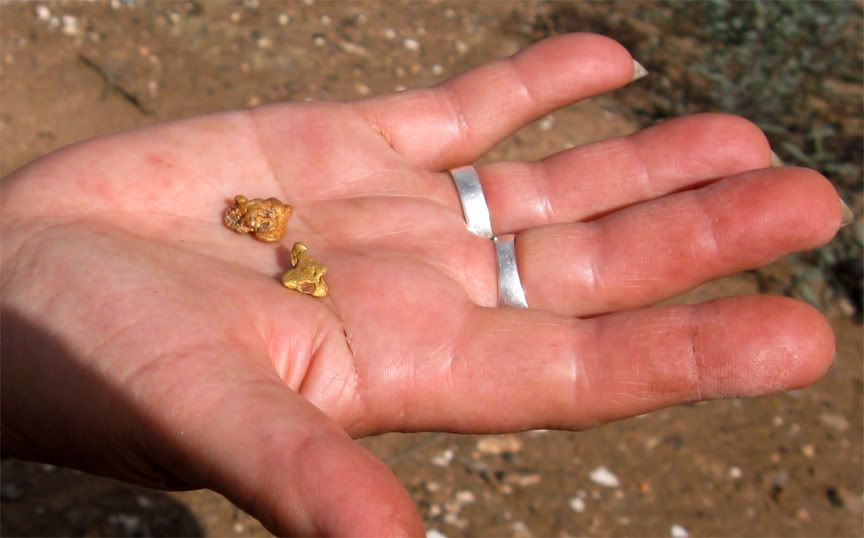
The smaller bit has the same sort of story. I found it after just 15 minutes at a different spot to above and then, not another sausage, even though I covered the whole of the hillside taking most of the afternoon. Sometimes there are slim pickings, but a quick first piece is always motivational and keeps you going all day. These two nice bits were found near Bendigo in the so-called Golden Triangle in Victoria and total 6.6 grams.
________________
This is not a very interesting picture at first glance, but it shows that there is gold in unlikely looking places. This area in the Golden Triangle has been totally flogged by hundreds if not thousands of detectorists, but we still found some good gold there. (There is no bad gold, by the way.) When we first came upon this spot it was covered by a great depth of leaf litter. My wife and I raked it clean in order to detect it more effectively. It took a good hour to do so.
When you are in a hot area, that is well-flogged, then you have to change the game into your own favour. All the earlier detecting efforts by others had been THROUGH the deep leaf litter. This means that the coil was effectively about four inches above the true ground level, thus losing depth and penetration. So a bit of effort to clear the ground may pay off.
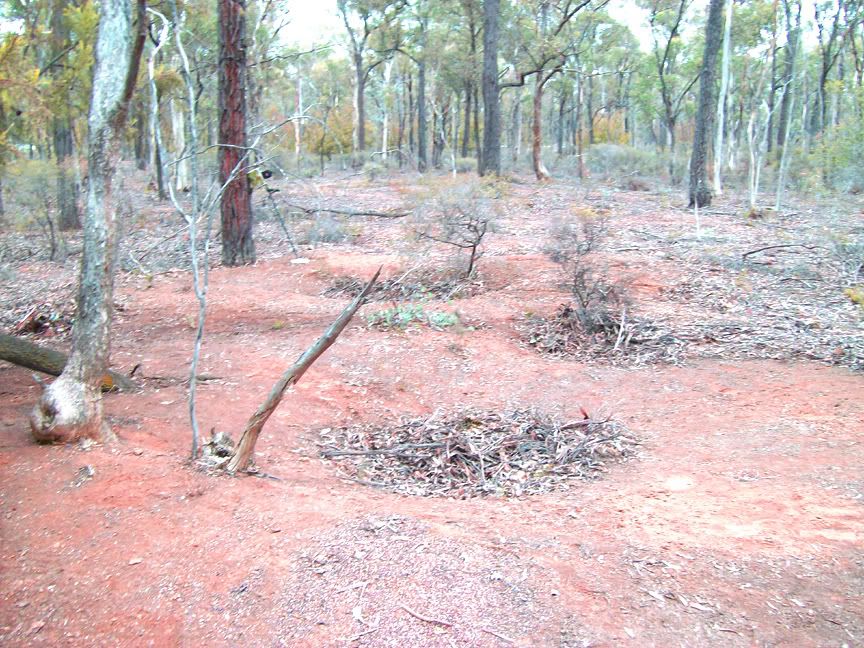
We got three good targets here from what is a "flogged to death" area. About 20 feet away, that same afternoon, my mate raked out an area and picked up a very good nugget also. Raking is not some sort of magic ritual that guarantees gold. You must have a good reason to do the necessary work, and we did. This spot is also near Bendigo in Victoria.
_________________
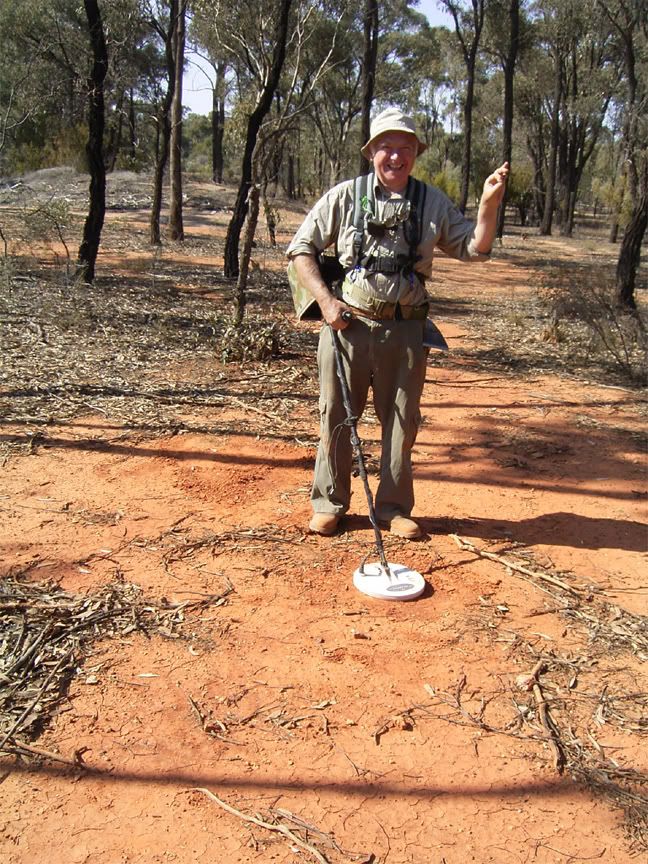
This pic is taken just after finding a half-grammer in a pretty ordinary looking and well-flogged area in the Golden Triangle. One step behind me I found another one grammer, and three or four steps to the right was a three grammer that is now one of Robyn's gold nugget necklaces. Further behind me I picked up five more nuggets in an area no bigger than a lounge room. This area has been done over often, but slow and low pays off every time, provided there is gold there. But you'll never know if you don't go slow and low.
I like this pic because it says "There is gold anywhere." This was an unlikely place we found whilst staying at Dunolly in Victoria.
_____________
I like this next pic as it shows a bit of success after quite a lot of effort. I had walked up and down this area several times without the slightest success. It is quite a long gentle hill but looks fairly flat in the pic. We had done some research on this area and it seemed likely to have some gold, so I was determined to keep at it.
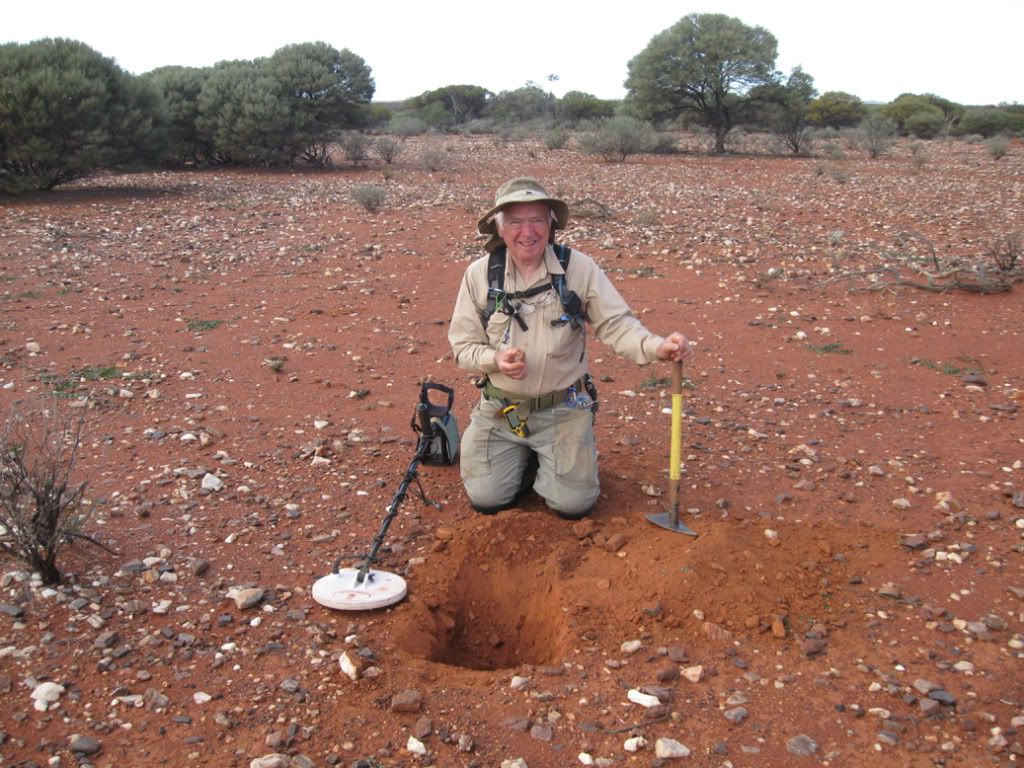
It turned out to be a 44 gram specimen from about 15 inches down. The soil was quite hard, but it only took about 15 minutes to get the prize. We are camped only 200 metres away. That's one of the great things about prospecting in some parts of Oz: you can camp right on the gold.
_______________
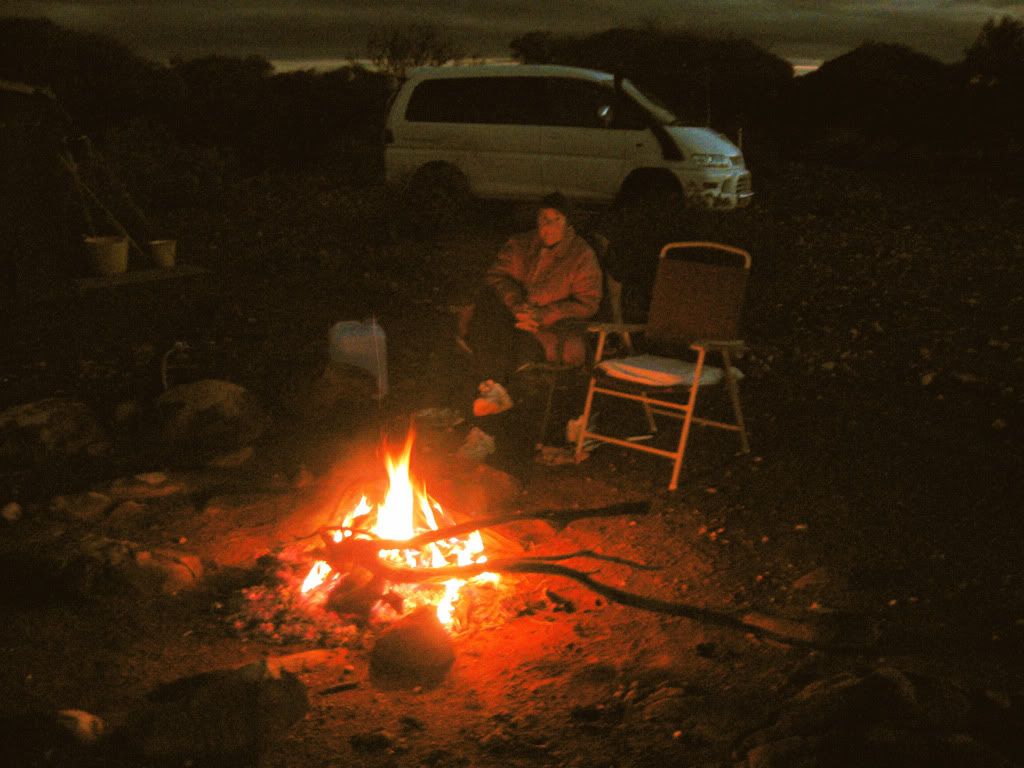
This next one is not the greatest of shots, but it reminds me of the many pleasant nights sitting under the stars in outback Western Australia. They are so bright and overwhelming in the deep blackness that is an outback night. "The heavens declare the glory of God ... "
It is mid-winter and Robyn looks cold, but she loves it. The 4WD Mitsubishi Delica is easy to see, but our camper-trailer is hiding at the top left of the pic.
______________
This pic is called "The Great Failure". The hole took many hours of work, in fact almost the whole day, but to no avail. It was a great signal and seemed very promising indeed. It turned out to be a great big hunk of ironstone residing about two and a half feet down. I had to break up and dig through other large pieces of quartz and ironstone before I came to the offending very large piece. Once it was out of the hole, the signal was gone! What a low blow! The ironstone, once out of the ground, did not signal at all! A strange phenomena.
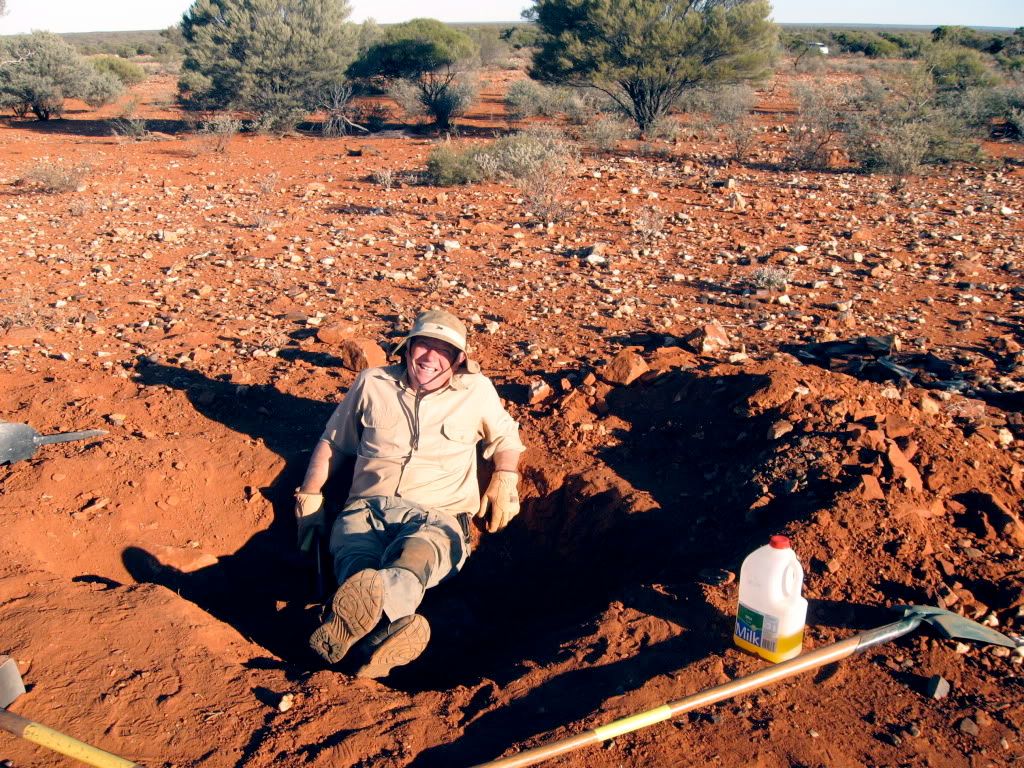
It is no consolation to learn that I'm not the only one to have had this experience. Practically everyone I told later recounted similar tales of detecting woe. It took many hours to dig it out, but it took a couple of days to recover from the effort of it all.
The white speck at the top right of the pic is our campsite.
________________
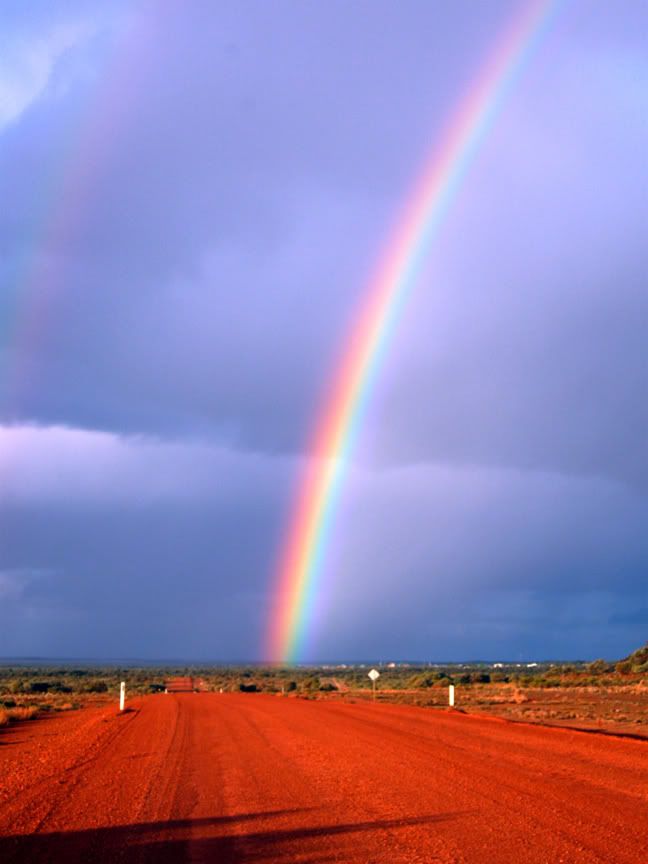
We came upon this lovely sight on the way to Laverton in Western Australia. To my eye this is a nice pic but, if so, it is entirely due to the technology of the camera. All I did was aim and push the button as we sped along.
___________________
This great lump is a quarter of its original size. It was about one foot into the ground and giving off a wonderful and loud signal. I had high hopes for it.
I picked up the great lump and progressively broke it into ever smaller pieces and passed them over the coil. The silent bits were discarded.
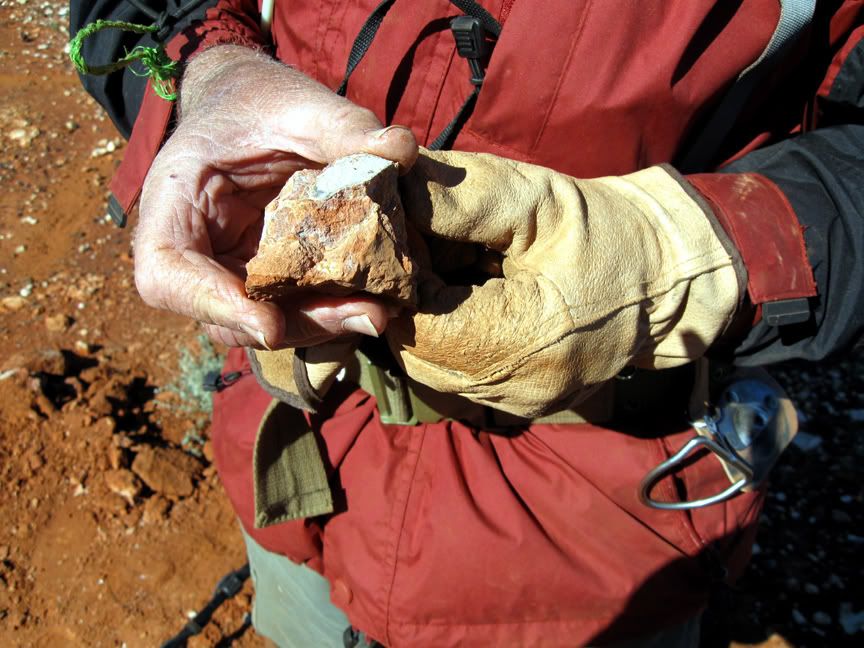
Finally, there was only one tiny bit left and it contained, wait for it, wait for it: half a gram of gold!
The great lump was all bluff and front with no real substance: it's a bit like many politicians really.
__________________
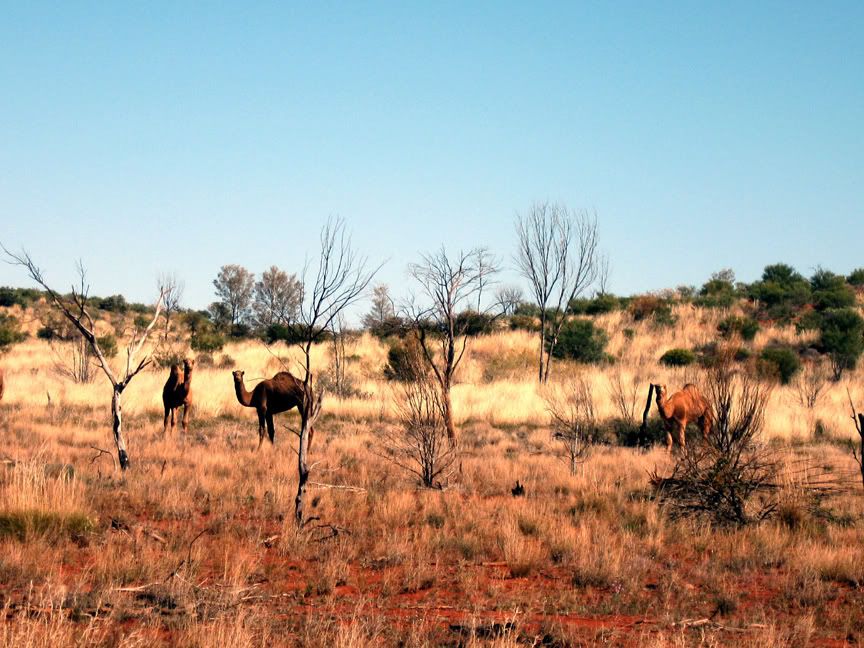
I put this last pic in as it may surprise many to learn that Australia supports huge numbers of camels in the outback regions. They were the original mode of transport and beasts of burden, and were simply released into the bush when replaced by more modern vehicles.
They flourished and some say that there are millions of them now. We have seen a lot of them as well as other feral animals: donkeys, horses, goats, cats, pigs and foxes. But the good news is that you won't see many humans if you go to the good spots. You have it all to yourself, and all the gold as well, provided you can find it.
__________________
There's more to come yet but at least you have been warned.
END
This first pic shows a pleasant surprise that was ours in finding instant gold. I got out of the car, started up the GPX4500 and walked no more than 10 steps and bingo, got the larger piece. But then reality struck and, for the next four hours, I did not get another signal!
The smaller bit has the same sort of story. I found it after just 15 minutes at a different spot to above and then, not another sausage, even though I covered the whole of the hillside taking most of the afternoon. Sometimes there are slim pickings, but a quick first piece is always motivational and keeps you going all day. These two nice bits were found near Bendigo in the so-called Golden Triangle in Victoria and total 6.6 grams.
________________
This is not a very interesting picture at first glance, but it shows that there is gold in unlikely looking places. This area in the Golden Triangle has been totally flogged by hundreds if not thousands of detectorists, but we still found some good gold there. (There is no bad gold, by the way.) When we first came upon this spot it was covered by a great depth of leaf litter. My wife and I raked it clean in order to detect it more effectively. It took a good hour to do so.
When you are in a hot area, that is well-flogged, then you have to change the game into your own favour. All the earlier detecting efforts by others had been THROUGH the deep leaf litter. This means that the coil was effectively about four inches above the true ground level, thus losing depth and penetration. So a bit of effort to clear the ground may pay off.
We got three good targets here from what is a "flogged to death" area. About 20 feet away, that same afternoon, my mate raked out an area and picked up a very good nugget also. Raking is not some sort of magic ritual that guarantees gold. You must have a good reason to do the necessary work, and we did. This spot is also near Bendigo in Victoria.
_________________
This pic is taken just after finding a half-grammer in a pretty ordinary looking and well-flogged area in the Golden Triangle. One step behind me I found another one grammer, and three or four steps to the right was a three grammer that is now one of Robyn's gold nugget necklaces. Further behind me I picked up five more nuggets in an area no bigger than a lounge room. This area has been done over often, but slow and low pays off every time, provided there is gold there. But you'll never know if you don't go slow and low.
I like this pic because it says "There is gold anywhere." This was an unlikely place we found whilst staying at Dunolly in Victoria.
_____________
I like this next pic as it shows a bit of success after quite a lot of effort. I had walked up and down this area several times without the slightest success. It is quite a long gentle hill but looks fairly flat in the pic. We had done some research on this area and it seemed likely to have some gold, so I was determined to keep at it.
It turned out to be a 44 gram specimen from about 15 inches down. The soil was quite hard, but it only took about 15 minutes to get the prize. We are camped only 200 metres away. That's one of the great things about prospecting in some parts of Oz: you can camp right on the gold.
_______________
This next one is not the greatest of shots, but it reminds me of the many pleasant nights sitting under the stars in outback Western Australia. They are so bright and overwhelming in the deep blackness that is an outback night. "The heavens declare the glory of God ... "
It is mid-winter and Robyn looks cold, but she loves it. The 4WD Mitsubishi Delica is easy to see, but our camper-trailer is hiding at the top left of the pic.
______________
This pic is called "The Great Failure". The hole took many hours of work, in fact almost the whole day, but to no avail. It was a great signal and seemed very promising indeed. It turned out to be a great big hunk of ironstone residing about two and a half feet down. I had to break up and dig through other large pieces of quartz and ironstone before I came to the offending very large piece. Once it was out of the hole, the signal was gone! What a low blow! The ironstone, once out of the ground, did not signal at all! A strange phenomena.
It is no consolation to learn that I'm not the only one to have had this experience. Practically everyone I told later recounted similar tales of detecting woe. It took many hours to dig it out, but it took a couple of days to recover from the effort of it all.
The white speck at the top right of the pic is our campsite.
________________
We came upon this lovely sight on the way to Laverton in Western Australia. To my eye this is a nice pic but, if so, it is entirely due to the technology of the camera. All I did was aim and push the button as we sped along.
___________________
This great lump is a quarter of its original size. It was about one foot into the ground and giving off a wonderful and loud signal. I had high hopes for it.
I picked up the great lump and progressively broke it into ever smaller pieces and passed them over the coil. The silent bits were discarded.
Finally, there was only one tiny bit left and it contained, wait for it, wait for it: half a gram of gold!
The great lump was all bluff and front with no real substance: it's a bit like many politicians really.
__________________
I put this last pic in as it may surprise many to learn that Australia supports huge numbers of camels in the outback regions. They were the original mode of transport and beasts of burden, and were simply released into the bush when replaced by more modern vehicles.
They flourished and some say that there are millions of them now. We have seen a lot of them as well as other feral animals: donkeys, horses, goats, cats, pigs and foxes. But the good news is that you won't see many humans if you go to the good spots. You have it all to yourself, and all the gold as well, provided you can find it.
__________________
There's more to come yet but at least you have been warned.
END

 Thanks for the pics, Steve in so az
